
.png)
Project Overview
The Copenhagen Dinner Chair was designed and built during an 8-week study abroad in Copenhagen, Denmark. Inspired by traditional Danish furniture and design principles, I set out to create a dining chair that balances functionality, comfort, and a refined aesthetic.
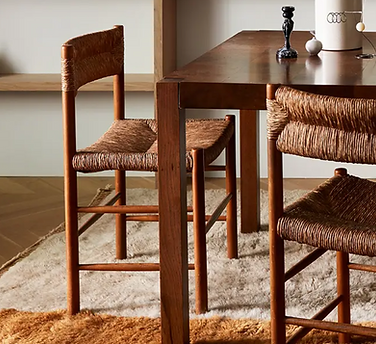
The final design combines a simple, slightly rounded wooden frame with traditional Danish paper cord weaving. Curved details, intentional negative space, and exposed joinery create a chair that feels minimal while still showcasing the craftsmanship of its construction.
Problem Statement:
"How might we design a sleek Danish chair that balances minimalist aesthetics, comfort, and traditional craftsmanship?"
Inspiration
During my time in Copenhagen, I studied traditional Danish furniture and drew inspiration from several iconic Danish chairs. These examples helped establish the design language for my chair, particularly through their use of organic curves, negative space, natural materials, and traditional weaving.

Wishbone Chair - Hans Wegner
The Wishbone Chair features beautiful curves and traditional Danish paper cord weaving techniques.
Council Chair - Poul Kjærholm
The Council Chair illustrates intentional negative space and elegant curves that connect the seat and back.
Round Chair - Hans Wegner
The Round Chair incorporates a curved woven back and traditional Danish weaving, creating balance between structure and craftsmanship.
The Customer
The Copenhagen Dinner Chair is designed for someone who values both practical and aesthetically considered furniture. They appreciate traditional Danish design and look for a balance between form and function in the pieces they bring into their home.
The chair is designed for users who prioritize:
-
Comfort and ergonomic support for extended periods of use
-
Minimalist, visually pleasing furniture
-
Traditional craftsmanship and Danish design
-
Furniture that serves a practical purpose while contributing to the overall aesthetic of a space


Ideation
I began with analog sketch ideation exploring different Danish design principles and ways to balance structure, functionality, and visual simplicity.

Prototype 1
For the first round of ideation, I developed three different concepts, each exploring a different area of Danish furniture design. I focused on negative space, functionality, and the relationship between the seat and back of the chair.
Prototype 2
During the second round of ideation, I moved forward with my second concept. I explored incorporating traditional Danish weaving into the seat and experimented with the idea of using a plywood back.
Ultimately, I decided to further develop the concept with a woven seat, allowing the weaving to become an important part of both the chair's function and visual identity.
Design Language
I established a set of design goals to guide the development of the chair's form, details, colors, materials, and overall personality.
Form
Slightly rounded and refined
Details
Curves, negative space, joinery, and weaving
Color
Natural wood, tans, and browns
Materials
Wood and paper cord
The goal was to create a chair that felt warm and approachable while maintaining the simplicity and craftsmanship associated with Danish design.

Initial Prototyping
I began with small-scale models using wood, glue, and string to visualize the overall direction of the chair. These studies allowed me to quickly explore proportions, structure, and weaving before moving into full-scale prototypes.
First Prototype
The first full-scale prototype featured a thick woven seat and was shorter than I had initially intended. The proportions made it feel more like an outdoor chair than a dining chair, and there was too much space between the front and back legs.
Second Prototype
The second prototype explored a more open seating concept with lighter, airier weaving. The stretchers were visible through the seat from above, while the exposed seat frame created a picnic-bench-like appearance.

Profile Iterations
I explored multiple profile iterations throughout the design process to achieve a more elegant form and silhouette.

Three rounds of iterations helped refine the proportions and curvature of the chair while maintaining the simple, understated qualities of traditional Danish furniture.
Technical Drawing
The technical drawings established the accurate dimensions and proportions of the chair from the top, side, and front views.


Creating a complete technical drawing allowed me to plan the construction of the chair and use it as a reference throughout the building process.
Cardboard Prototype
I then created a full-size cardboard model featuring a double-woven seat and woven backrest. This prototype helped identify several key changes needed for the final design.


I decided to lengthen the seat so that the user's backside would not extend beyond the chair. I also determined that the stretchers needed to be curved to prevent them from becoming uncomfortable when sitting.
Building Process
The chair was constructed by referencing the technical drawings throughout each stage of the building process. Measurements and cuts were carefully planned to translate the final design from the drawings into a full-scale piece of furniture.

The construction process allowed me to refine the relationship between the individual components while maintaining the proportions and details established during the prototyping phase.
Final Concept
The Copenhagen Dinner Chair combines traditional Danish design principles with a simple, contemporary form. Its slightly rounded wooden frame, intentional negative space, and woven paper cord seat create a balance between structure, comfort, and craftsmanship.


The final chair reflects the qualities that initially inspired the project: natural materials, elegant curves, functional construction, and traditional Danish weaving.
Brooke Visker Portfolio